
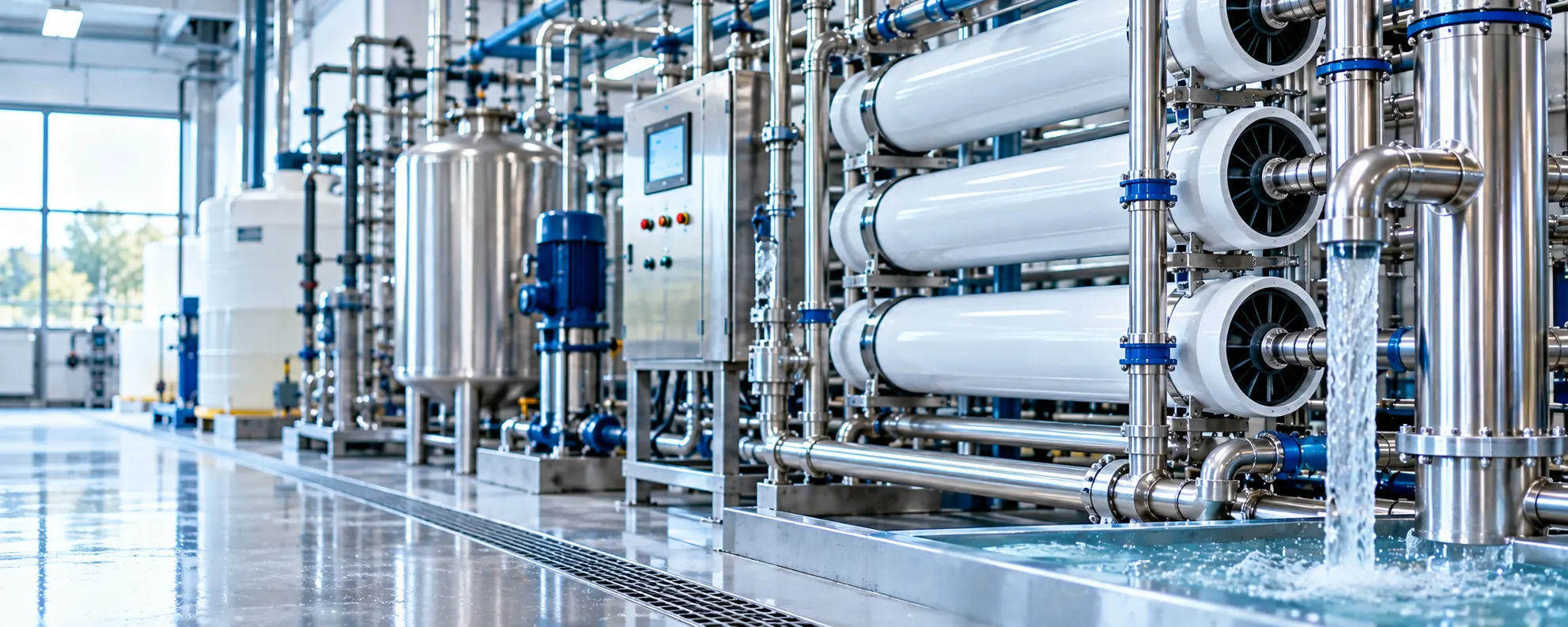
Protect Membranes. Control Fouling. Maintain RO Performance.
Reverse osmosis membranes operate under demanding conditions. Scale, silica, organic fouling, microbiological growth and residual oxidants can progressively affect membrane performance, increase differential pressure, reduce permeate flow and shorten membrane life.
Key Factors Behind RO Performance
RO membrane performance is influenced by everything that enters the membrane system.
Scale, silica, organic deposits, biological fouling and oxidants can gradually affect:
- Permeate flow
- Salt rejection
- Feed pressure
- Differential pressure
- Cleaning frequency
- Water recovery
- Membrane service life
- Overall RO operating cost
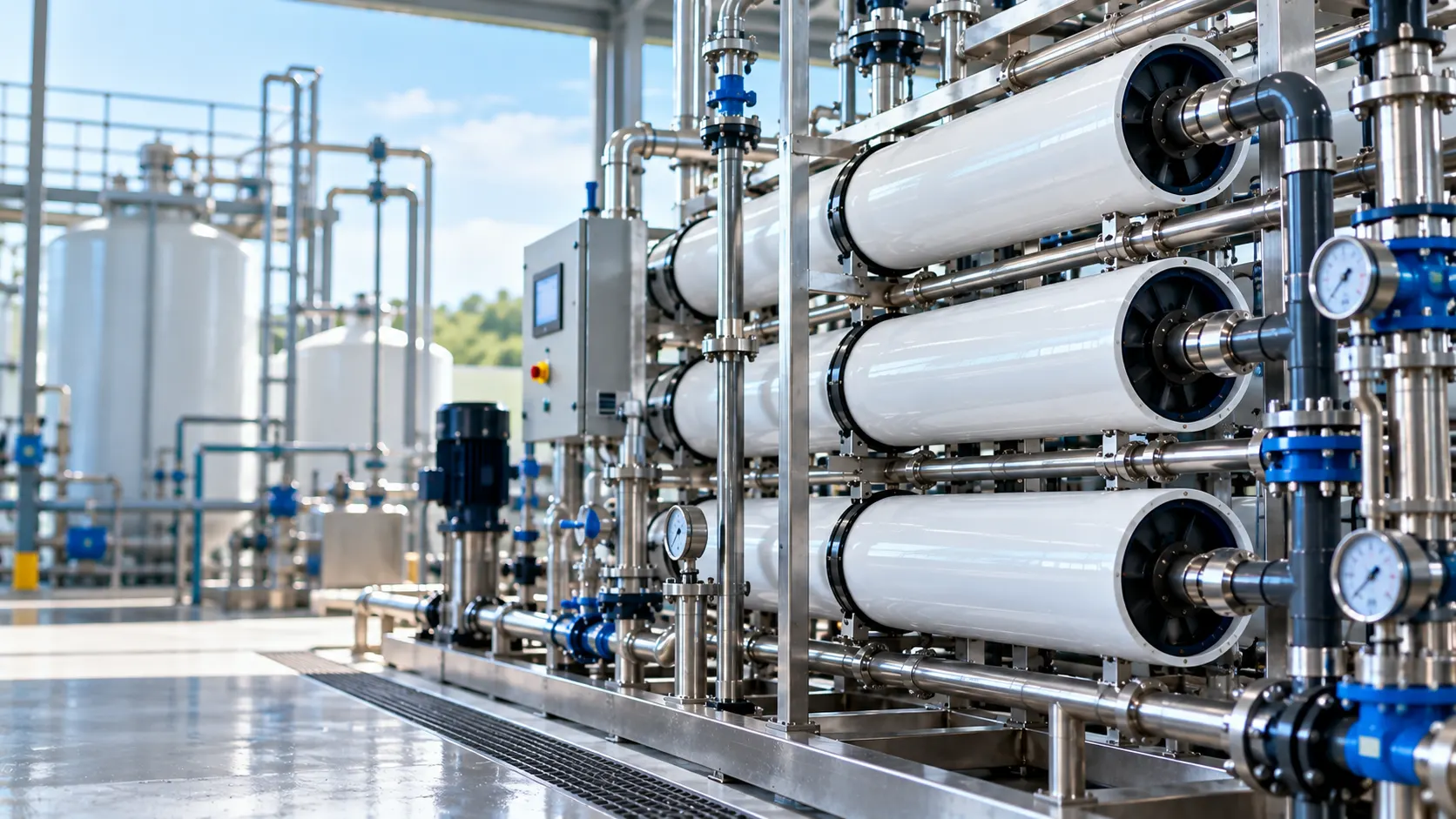
MEMSAFE™
Control fouling. Maintain filtration performance.
The Brykonchem Approach
A disciplined 5-step engineering process behind every MemSafe™ program.
-
1
Protect
RO Antiscalant
Control scale and mineral deposition -
2
Prevent
Oxidant Control
Protect sensitive membrane chemistry -
3
Clean
Organic Cleaning
Remove organic and process-related fouling -
4
Restore
Inorganic Cleaning
Remove mineral and metal deposits -
5
Control
Microbiological Treatment
Manage biological growth and biofouling -
6
Preserve
Membrane Preservation
Protect membranes during suitable shutdown periods
01. RO Antiscalant Protection
Mineral precipitation is one of the most common causes of RO membrane performance deterioration. MEMSAFE™ 1191 is an RO antiscalant designed to help control mineral scale and deposition on membrane surfaces.
Solutions Include
MEMSAFE™ 1191
02. High-Silica Scale Control
Silica can present a particularly difficult scaling challenge in RO systems, especially when concentration increases across the membrane system. MEMSAFE™ 1110 is designed for RO applications where high silica loading requires specialized scale-control and dispersancy support.
Solutions Include
MEMSAFE™ 1110
03. Organic Membrane Cleaning
Organic deposits can gradually accumulate on membrane surfaces and reduce filtration efficiency. MEMSAFE™ 10 is a high-pH organic membrane-cleaning solution designed to support the removal of organic fouling and process-related residues during RO cleaning cycles.
Solutions Include
MEMSAFE™ 10
04. Inorganic Membrane Cleaning
Mineral scale and inorganic deposits can restrict membrane flow and increase operating pressure. MEMSAFE™ 1177 is a low-pH membrane-cleaning solution designed to address inorganic and mineral fouling as part of a structured RO cleaning program.
Solutions Include
MEMSAFE™ 1177
05. Chlorine & Oxidant Removal
Residual chlorine and other oxidizing agents can damage sensitive membrane chemistries, particularly polyamide membranes. MEMSAFE™ 1108 is a sodium metabisulfite-based reducing agent designed to help remove residual chlorine and oxidizing agents from RO feedwater.
Solutions Include
MEMSAFE™ 1108
06. Microbiological Control & Preservation
Microbiological growth can lead to biofilm formation, increased pressure drop and deterioration of RO performance. MEMSAFE™ 21 is a membrane biocide/preservative solution designed to support microbiological control and membrane preservation in appropriate applications.
Solutions Include
MEMSAFE™ 21
07. Membrane Biocleaning
Where biological fouling is a significant concern, an effective sanitization and cleaning program becomes essential. MEMSAFE™ 1111 is positioned as a membrane biocleaner for applications requiring targeted control of biological contamination and fouling.
Solutions Include
MEMSAFE™ 1111
Product Selection Guide
| Product | Solution | Primary Application |
|---|---|---|
| BRYKON™ 1100 | Organic Coagulant | Charge neutralization & particle destabilization |
| BRYKON™ 1901 | Anionic Flocculant | Flocculation, clarification & solid-liquid separation |
| BRYKON™ 1916 | Cationic Flocculant | Sludge flocculation & dewatering |
Technical Support That Goes Beyond Chemical Supply
BRYKONCHEM combines membrane-treatment chemistry with application-focused technical support to help develop treatment programs around actual RO operating conditions.
RO System Assessment
Reviewing membrane type, configuration, recovery, operating pressure and production conditions.
Feedwater Analysis
Understanding hardness, silica, TDS, iron, alkalinity, oxidants and other key water-quality parameters.
Fouling Identification
Identifying whether the primary challenge is scale, silica, organic fouling, metal deposition or biological fouling.
Product Selection
Selecting the appropriate MEMSAFE™ solution or combination of treatments.
Cleaning Strategy
Developing an appropriate cleaning sequence based on the fouling type and membrane compatibility.
Performance Monitoring
Tracking key parameters such as permeate flow, salt rejection, differential pressure and cleaning frequency.
Prevent Fouling. Protect Membranes. Restore Performance.
From continuous antiscalant protection to specialized membrane cleaning, microbiological control and preservation, MEMSAFE™ provides a focused approach to maintaining RO membrane performance and supporting reliable water production.